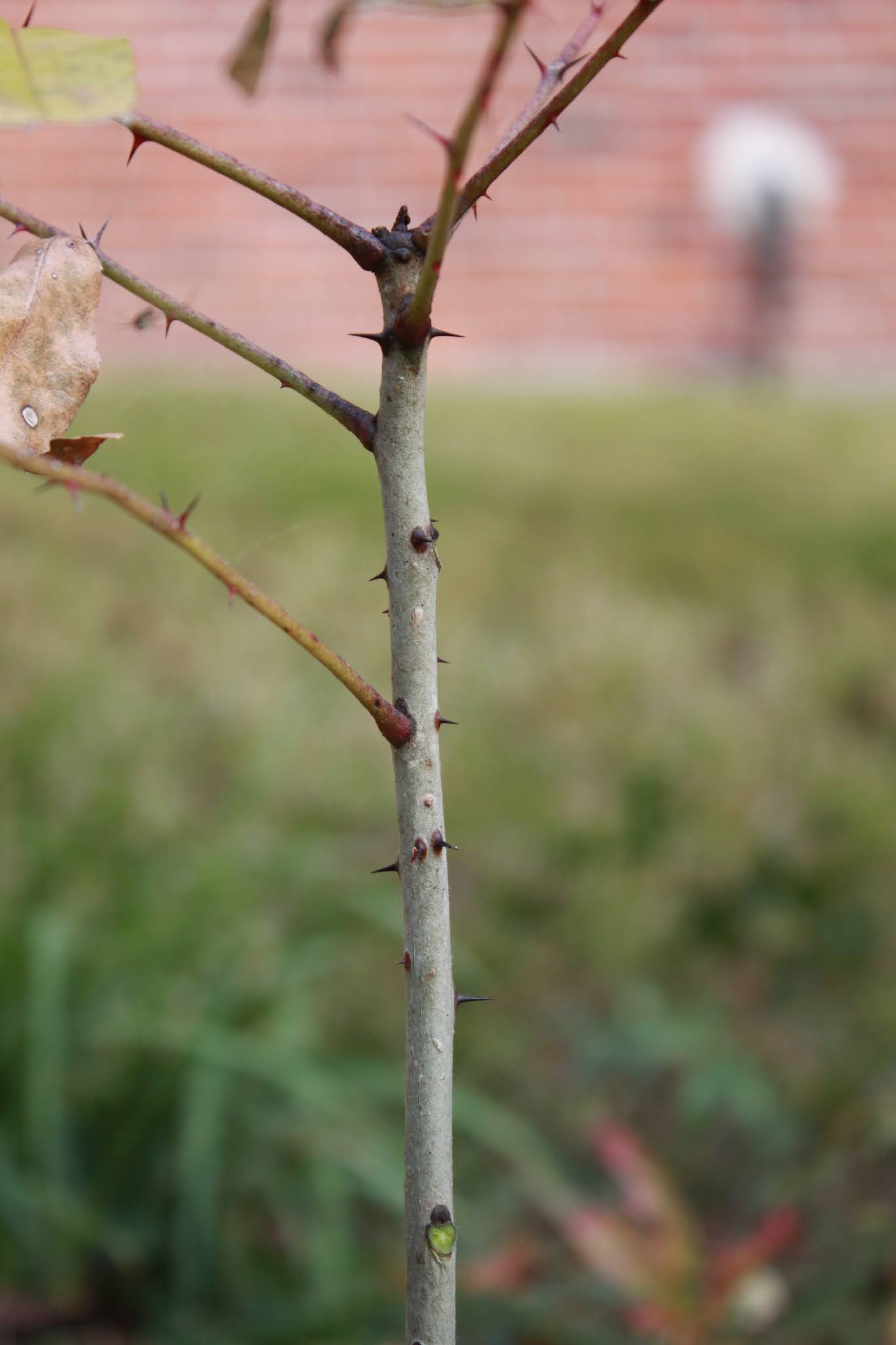
The toothache tree (
Zanthoxylum clava-herculis) is known for its
peculiar bark. Medicinal use of the inner bark is the origin of the common name 'toothache tree': chewing the
inner bark numbs the gums, relieving the pain associated with a
toothache. The outer bark of this tree has resulted in another common
name: Hercules' club. The whole tree is covered in spines, but the trunk
of the tree and its older branches have large thorns, giving the trunk and branches a particularly aggressive
appearance, recalling the deadly weapon used by the Greek hero Heracles.
There are three individual toothache trees in the arboretum collection, all growing at the southwest corner of Mickle Hall. Two of the three trees were purchased from Woodlanders Nursery out of Aiken, South Carolina. They were planted in 1989. More than a decade later, Ed Leuck added an additional specimen, collected in Shreveport, from along Clyde Fant Parkway. Interestingly, the younger tree has significantly outpaced the two trees from South Carolina. The specimen from Shreveport is over twice the size of the 1989 plantings.
 |
| This is the southwest corner of Mickle Hall, the entrance to the basement of the building. The youngest toothache tree is almost two stories tall, reaching the first floor windows. French mulberry (Callicarpa americana) and coral bean (Erythrina herbacea) grow in its shade. The older two toothache trees are nearby (not pictured), and half the size of the younger tree. |
 |
| Trunk detail: mottled bark with thorn-tipped corky knobs |
 |
| Bark detail |
 |
| Branch with thorns in profile; branchlet also showing thorns |
 |
| Cluster of unripe fruit |
 |
| Zanthoxylum clava-herculis leaf detail |
You can see additional photos of the arboretum's toothache trees
here.
For more information about this species consult the following:
United States Department of Agriculture
Louisiana Plant Identification and Interactive Virtual Tours (LSU AgCenter)
Texas A&M Forest Service