Showing posts with label Crataegus marshallii. Show all posts

Monday, June 13, 2022

Tree of the Week: Parsley Hawthorn (Crataegus marshallii)

Currently, there is only one parsley hawthorn (Crataegus marshallii) in the arboretum collection. It grows on a steep slope, in full sun, near the southwest corner of Mickle Hall. Overall, this parsley hawthorn is a very fine specimen whose growth has been unhindered. This has allowed the tree to develop a nice form and it positively exudes an aura of health.

Unfortunately, despite this vigor, our parsley hawthorn is battling a fungal infection. Over the past several weeks, the rounded canopy has exhibited a pink hue, not from any ripening fruit, but from a pervasive 'rust:' a fungus. In the above photo, we can see remnants of hawthorn fruits mottled by fungal strands.


The parsley hawthorn leaves show minor damage, but this year the fruits are a total loss.
 
The orange strings are tubes that release fungal spores into the environment. These spores need to land on an evergreen host  to continue their life cycle.


The parsley hawthorn lost a reproductive season, and the fungal infection is unsightly, but the overall health of this hawthorn isn't brought into question. However, multiple seasons of such abuse might very well undermine its longevity. Furthermore, this hawthorn isn't the only victim. Hawthorns, mayhaws and our lone crab apple tree have all suffered from this rust, or one of the several different rusts that are carried by the eastern red cedar (Juniperus virginiana). You can read about the ongoing battle on older blog posts, found here, here and here. In 2021, one healthy eastern red cedar, which was thoroughly colonized by one or multiple rusts, was removed from the catalogue. This past spring we identified another eastern red cedar, whose twigs are serving as hosts for these fungi; it might also be removed, in the hopes of protecting the diverse collection of hawthorns.

Saturday, April 29, 2017

Tree of the Week: Parsley Hawthorn (Crataegus marshallii) VOLUME II

Not long ago we reviewed the yearly progress of an idiosyncratic native tree. The parsley hawthorn has interesting leaves, beautiful bark, and a noteworthy (bad) smell! Crataegus marshallii is especially important to the arboretum because it is found in healthy, stable populations in Caddo Parish's wild places. This week we're taking a second look at the arboretum's specimens and focusing on the bark.

Most of the year this tree has a beautiful, handsome, mottled bark. During high Spring, a change comes over specimens of this species that are still actively growing. Old bark is sloughed off, and fresh bark is revealed. Both the inside of the old bark and the outside of the new bark are a rich, velvety orange. Catch it while you can! As the new bark ages, it loses the orange color and takes on the familiar mottling of grey, brown, and green. Enjoy the photos below!


Wednesday, March 22, 2017

Tree of the Week: Parsley Hawthorn (Crataegus marshallii)

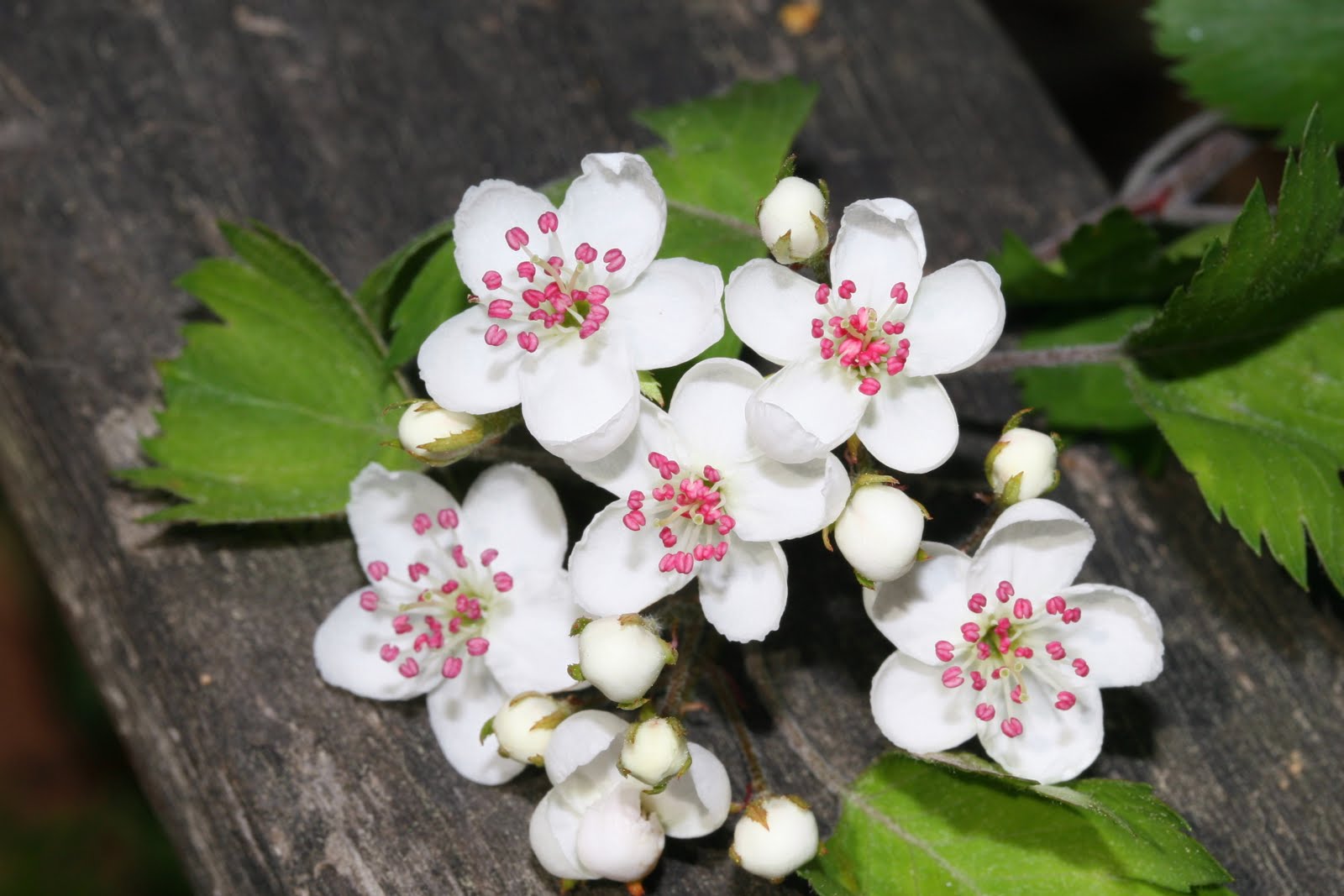
The parsley hawthorn (Crataegus marshallii) is in bloom this week. From a distance, this is unquestionably a good thing. The senior tree in the arboretum collection has a nice shape, interesting bark and is covered in white flowers. Visually, the parsley hawthorn is pleasing. 
This individual is from Akin's Nursery, planted in the winter of 1996, on the slope down from the Ratcliff Gazebo.
Flower clusters cover the tree.
Flower detail
Bark detail
The parsley hawthorn is olfactorily displeasing; it is distinctly malodorous. These cute white flowers produce an undesirable odor to attract its preferred pollinators, flies. Some flowers smell good, others don't. What attracts the fly often repels the human. In any case, the parsley hawthorn stimulates the senses.

You can see additional photos of this specimen here

For more information about this species consult the following:
United States Department of Agriculture
University of Florida IFAS