Showing posts with label Cornus florida. Show all posts

Thursday, December 19, 2024

Flowering Dogwood (Cornus florida)


Native residents of the southeastern woodlands may have heard the legend that the crucifixion of Jesus was accomplished using the lumber of a dogwood tree. This is perhaps worthy to note given the imminent Christmas season.

In mid-December, some leaves remain on the tree. In this photo, we see a dark red leaf drooping below a prominent flower bud. The flower buds remind us that spring-time is only a few months away.

More leaves can be found on the ground. The dogwood leaves are mixed together with leaves of the water oak (Quercus nigra).

Examined closely, we see the dogwood leaf has a rich red hue, speckled with a bit of black.


Sunday, September 24, 2017

Autumn Update

The summer heat and mosquitoes are lingering into this first week of autumn, and it has us seeing red....

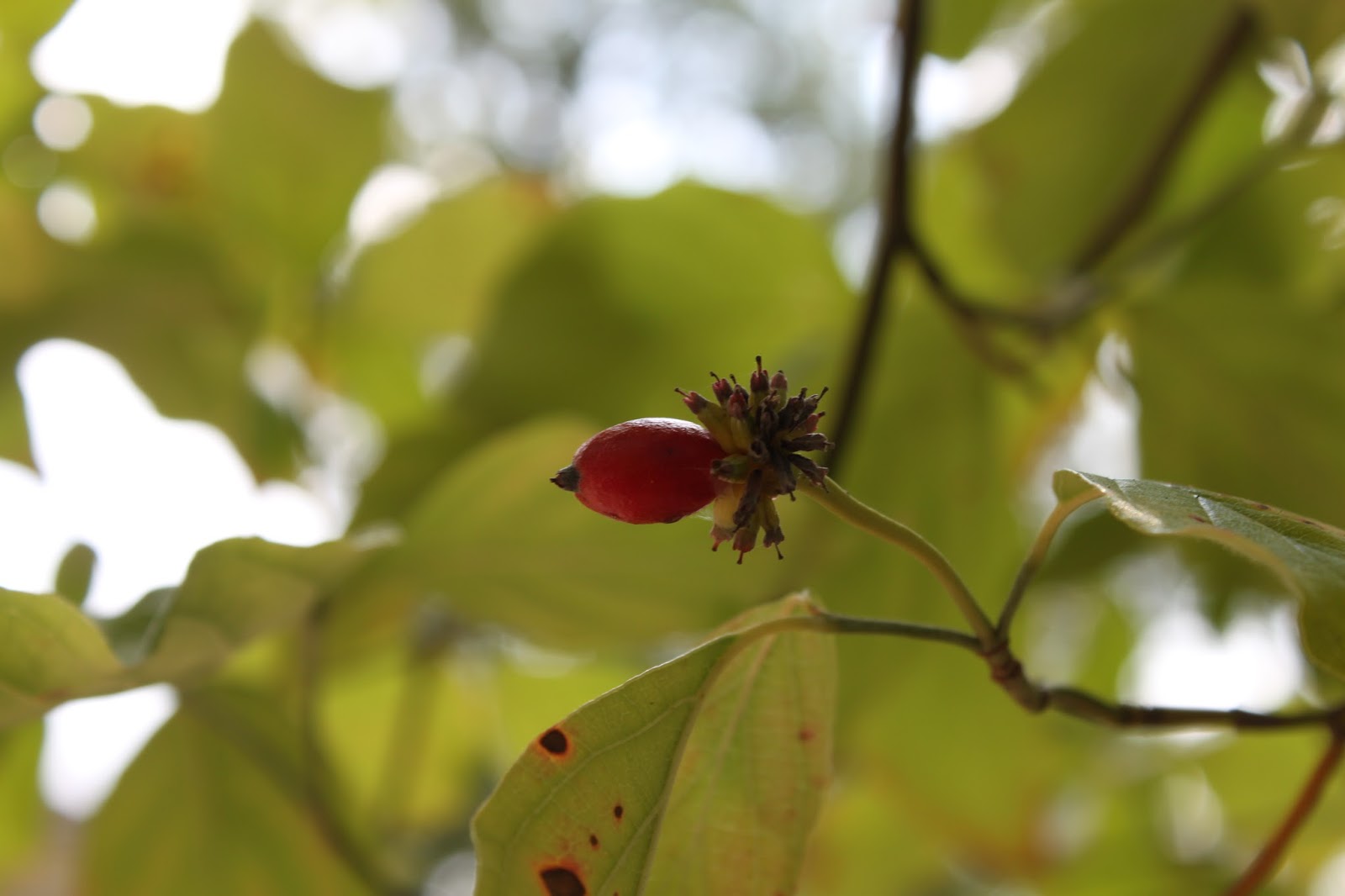
Cornus florida seeds are still hidden by its leaves.
Beautiful colors of the Cornus florida leaves
Red leaves of Rhus glabra
Orange-red seeds of Euonymus americanus
Red, red, and more red: Magnolia grandiflora seeds
Non-native red spider lilies (Lycoris radiata) have found their way into the arboretum.
The red maples (Acer rubrum ) have dropped a few leaves.
Aesculus pavia seed partially concealed by husk
Aesculus pavia seed removed from husk
Size comparison of seeds, pictured from left to right: Cornus florida, Aesculus pavia, Magnolia grandiflora, and Liquidambar styraciflua (tree of the week!)

Wednesday, March 15, 2017

Tree of the Week: Flowering Dogwood (Cornus florida)

The flowering dogwood (Cornus florida) is a beautiful native tree. Its high ornamental value leads to frequent plantings in our local landscape. In autumn, the tree stands out for its red leaves and fruit, but this time of year, the flowers draw our attention. The blossoms are very showy around Easter. This species has cultural significance in the southeast, reminding some local Christians of the crucifixion of Jesus.

From the very beginning of the Arboretum's history, the flowering dogwood has been a 'must have' for the collection. Ed Leuck collected and planted over 10 individuals. Some were bought as small trees, others were collected as seedlings. Unfortunately, the flowering dogwood has proven to be very difficult to maintain here on the Centenary campus. Today we are left with one healthy tree. This individual was provided by Jack Price in 1993. It was collected as a seedling, nurtured in a pot for several years, and planted in the ground in 1996. It grows towards the top of a steep slope.

Our one remaining flowering dogwood is located near the Ratcliff Gazebo, with the steeple of Brown Chapel in the background.


The tree is doing well, producing a multitude of blooms.
Individual blossom with guest.
Detail of flower

You can see additional photos of the arboretum's flowering dogwood here. The flowering dogwood in this photo perished in the 2011 drought.

For more information about this species consult the following:
United States Department of Agriculture
University of Florida IFAS 
University of Kentucky Department of Horticulture

Friday, March 10, 2017

What's in Bloom?

A variety of trees, vines, and herbaceous plants have been blooming for several weeks now. The redbuds, mayhaws, and Mexican plums have put on a great show this year in the arboretum. Other species, like spiderwort and daisy fleabane, have just started to bloom, while the Louisiana irises have barely begun to produce flower stalks. A few of the arboretum's offerings are highlighted below.
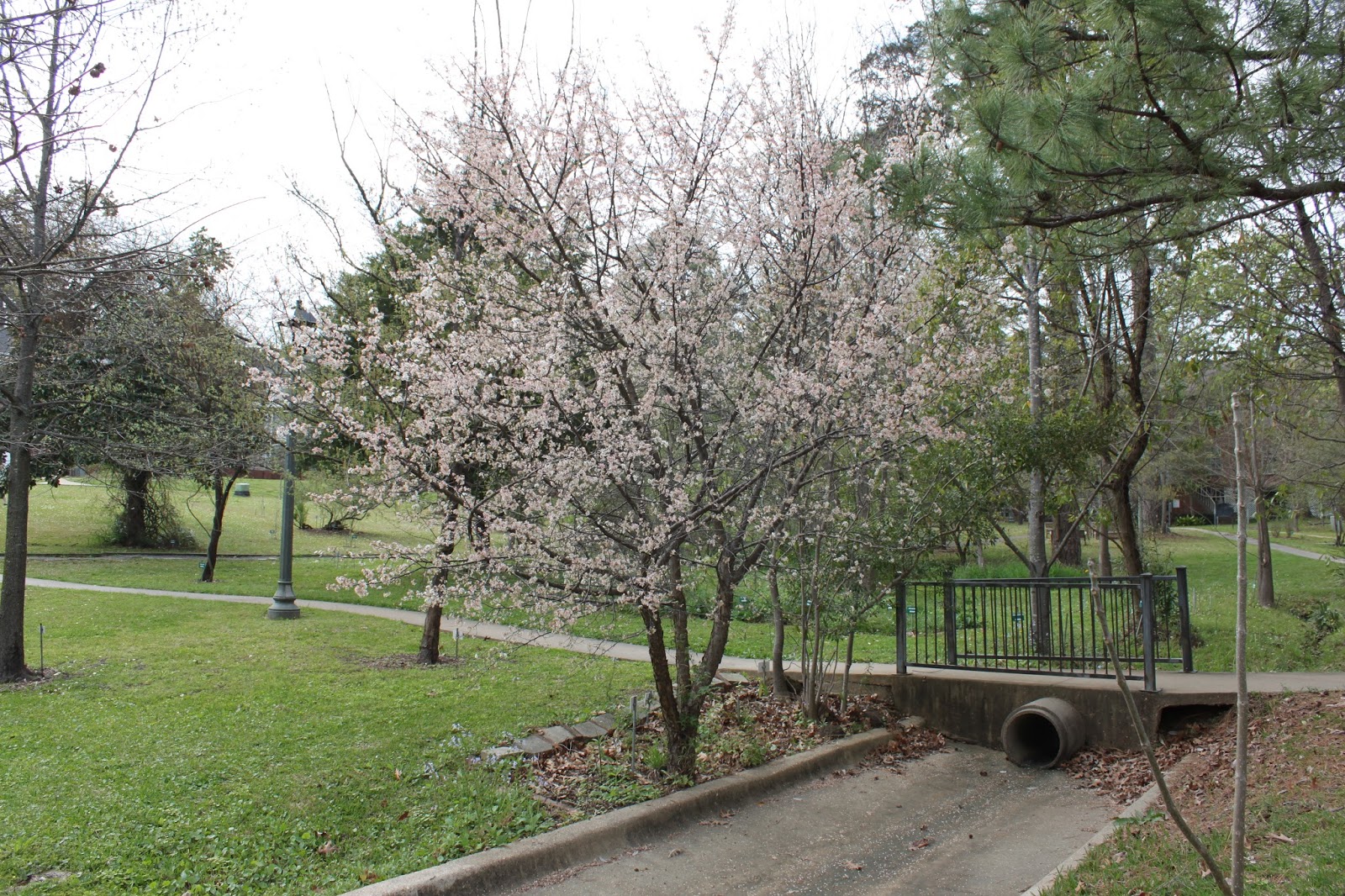
The brilliant white flowers of the Mexican plum (Prunus mexicana) have turned a pale white, tinged with pink.
This is a successful bunch of Atamasco Lily (Zephyranthes atamasco) growing under a cedar elm (Ulmus crassifolia).
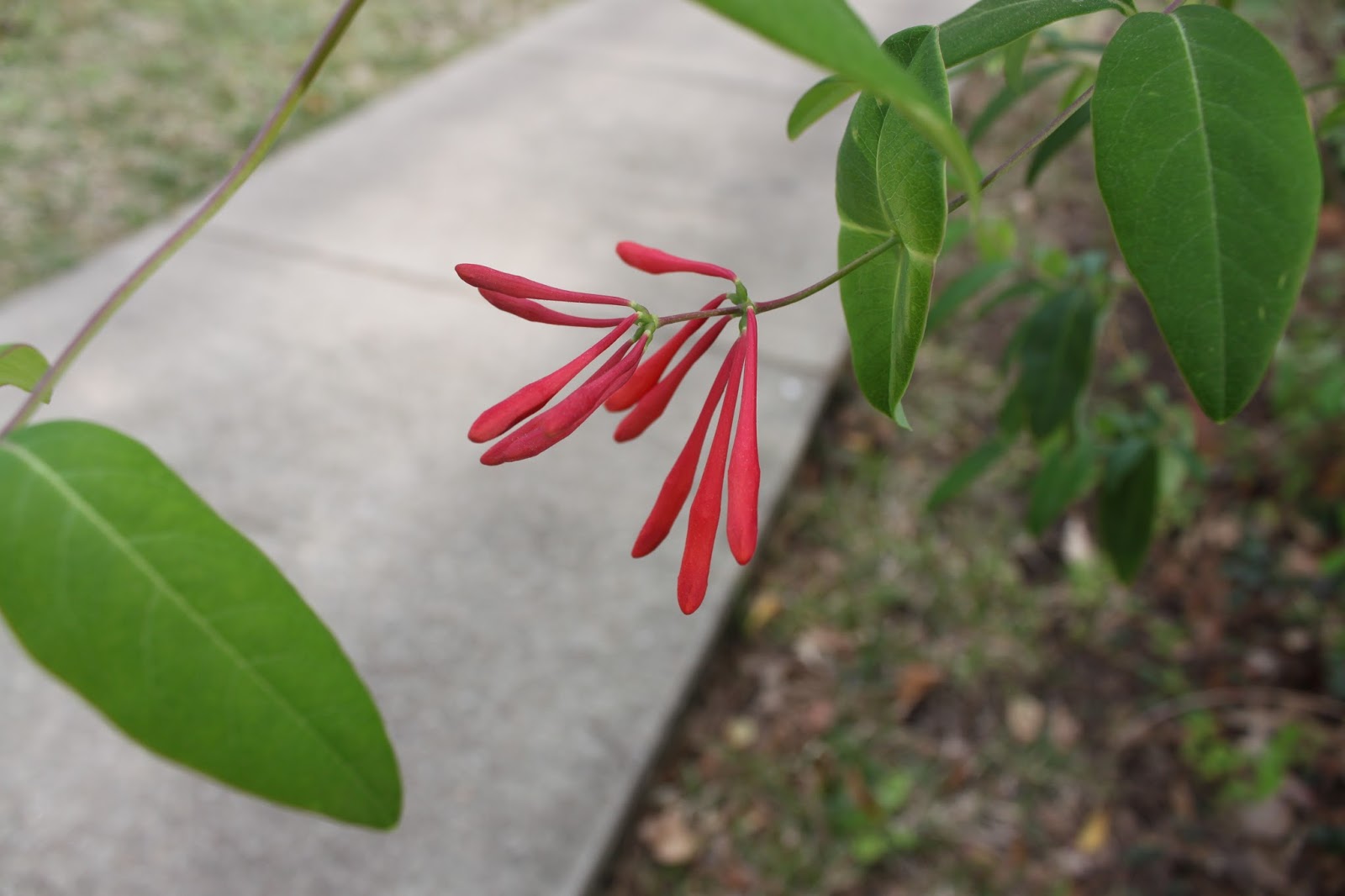
Flower bud of the coral honeysuckle vine (Lonicera sempervirens)
The coral honeysuckle grows with the oak leaf hydrangea (Hydrangea quercifolia).
Flowers of the wild crabapple tree (Malus angustifolia) are very fragrant.
Dewberry (Rubus trivialis) is prolific in the arboretum. It desires to take over, but we allow it only a few patches in which to thrive. This patch is located under a flowering magnolia (Magnolia grandiflora), near the fitness center.
Flowering Dogwood (Cornus florida)
The Green-and-Gold plant (Chrysogonum virginianum) grows low to the ground and spreads out, producing bright yellow flowers. This patch grows under the smooth sumac (Rhus glabra).
The blue phlox (Phlox divaricata) is beautiful and fragrant.
A healthy patch of Trillium