Showing posts with label Pinus palustris. Show all posts

Sunday, August 1, 2021

Tree of the Week: Longleaf Pine (Pinus palustris)

While living in our weeklong heatwave, it is difficult to imagine the frigidity of last winter. It was so cold that several evergreen species were no longer green. The longleaf pine (Pinus palustris) was one such species. Both longleaf pines in the arboretum collection suffered from the extreme winter weather. In late February, we documented this surprising event. You can read about it here. The younger longleaf pine bounced back faster; we reported on it in May. Today, we can confidently say that our 30-year-old longleaf pine is alive and well!

On March 9th, our 30-year-old longleaf pine was rusty brown.


On July 31st, we see mostly bright green needles, with a few clumps of brown needles still attached.


Sunday, May 30, 2021

Tree of the Week: Longleaf Pine (Pinus palustris)

We have good news to report: our young longleaf pine (Pinus palustris) appears to be rebounding from the intense winter weather that we experienced in February of this year. You can read about the weather event on an older post, found here.

This longleaf pine can be found on the grassy slope near Cline Hall (pictured) and Rotary Hall. It was planted at the same time as another young longleaf, but only this one survived its first year in the arboretum.

After the unusual winter weather passed, all of the old leaves were gradually dropped and replaced with fresh green needles. So all of the leaves pictured were produced this spring.


We are glad to see the fresh green growth on our young longleaf pine! The older longleaf, which is approximately 30 years of age, appears to be making a comeback as well, but since all of its limbs are way out of reach, we cannot observe its progress as easily. Hopefully we will have more pictures to come.


Tuesday, March 9, 2021

Tree of the Week: Longleaf Pine (Pinus palustris)


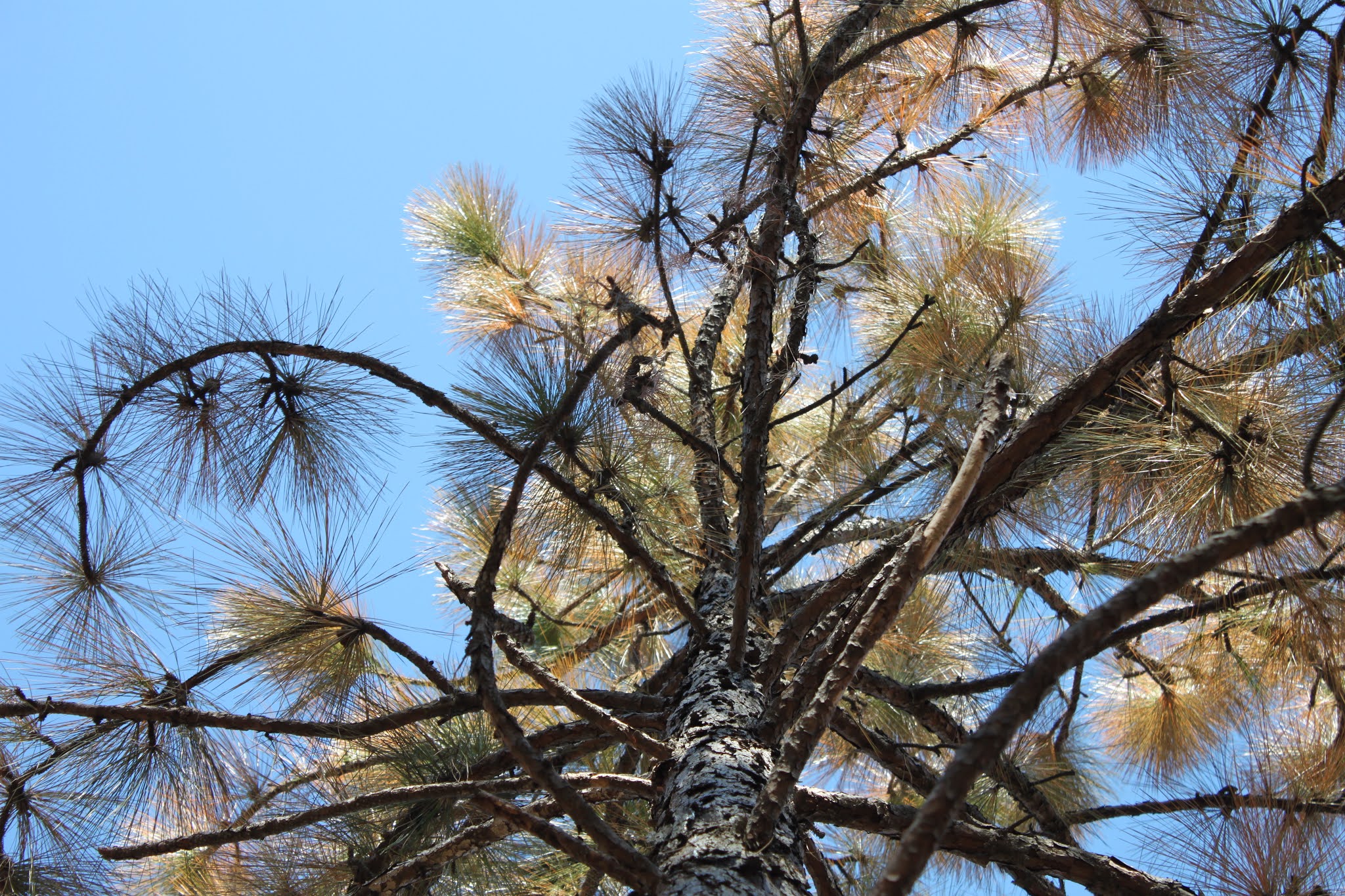
Our 30-year-old longleaf pine (Pinus palustris) is rusty brown this week. The unfortunate coloration of the longleaf crown is particularly noticeable when sandwiched between two green loblolly pines (Pinus taeda).


This particular longleaf pine is tall and skinny with no lower limbs, so the brown leaves are out of view unless your gaze is lifted upward. We are watching this tree closely to see if it will bounce back from the mid-February winter storm damage. You can read more about the rare winter weather event here.


The vantage point from atop the retaining wall gives us a glimmer of hope: if you look closely, you can see some green needles, primarily on the north (right) side of the tree.


Thursday, February 25, 2021

Longleaf Pine (Pinus palustris)

Both longleaf pines in the arboretum catalogue show damage from our mid-February winter storm week. The winter storm began on Valentine's Day. Snow blanketed the landscape that night. Ice and freezing rain fell later in the week, covering and compacting the snow. Temperatures remained below freezing for three full days. On February 16th, the recorded low was 2ºF.

 
The longleaf pine (Pinus palustris) is a Louisiana native evergreen, so it's surprising to see it with brown needles. Our 30-year-old longleaf is pictured in the above photo.
All of the pine needles are brown or mostly brown.

The young longleaf pine, planted in 2019, shows damage, too, but we still see some green in the leaves.


All photos were taken on February 23rd, 2021.

Sunday, September 27, 2020

Longleaf Pine (Pinus palustris)

This past winter two young longleaf pines were planted in the arboretum. At the beginning of the fall term, one tree looks better than the other. The tree pictured above looks great! This one grows on a grassy slope north of Cline Hall; Rotary Hall is pictured in the background.


This little longleaf pine doesn't look so good. It's growing in full-sun near the SUB. Its needles are drooping, suggesting that it simply needs a drink of water. This seems reasonable since this little tree lies beyond the spray of the arboretum's automated irrigation system. However, it has received regular drinks from the water hose throughout the summer.


Another possible explanation is that it has been unintentionally over-watered. Back in the early summer, a plumbing leak near the SUB created a shallow stream of water that ran for nearly a week. Perhaps this stream saturated the soil and all of the extra watering treatments inundated our little longleaf. Hopefully it will pull through!

Sunday, January 12, 2020

Tree of the Week: Longleaf Pine (Pinus palustris)

It's winter. The weather in northwest Louisiana is cool and rainy. Time to plant trees! Last month, in December, we added several woody plants to the arboretum catalogue. Two of the new recruits are pictured below. These longleaf pines (Pinus palustris) were grown on Willis Farm in Webster parish by Centenary College alumnus Dr. Gladden Willis, who specializes in native plants, particularly our native azaleas. 

A young longleaf pine (Pinus palustris) is pictured center. In December 2019, it was planted at the junction of two sidewalks near the Student Union Building. During the summer, this is a very sunny location. For the first couple of summers, care will be taken to make sure it gets plenty of water, but after that, this little tree shouldn't require much additional care. On January 12, 2020, it measured 31 inches high.
This longleaf pine was also planted in December 2019. It's growing in full sun, on the grassy slope north of Cline Hall. On January 12, 2020, it measured 28 inches high.


Sunday, August 18, 2019

Tree of the Week: Longleaf Pine (Pinus palustris)


How long, exactly, are the leaves of the so-called 'longleaf' pine (Pinus palustris)? This week we noticed orange pine needles accumulating under the arboretum's lone longleaf pine, so it's a good time to take a few measurements!
You can find our tree of the week growing at the top of a clay slope, near the red brick retaining wall that separates the arboretum from Hamilton Hall. This longleaf pine is more than 26 years old. It was collected in November 1993, and planted the same month. As you can see, all of the lower branches are absent, so for most of the year, it's difficult to inspect the leaves of this tree.
Looking up, it's clear that our longleaf pine is not a champion in the shade tree division. Sparsely covered spindly branches jut out from the slender, straight trunk.
Atop the retaining wall looking out into the arboretum, we can appreciate a very different view of the longleaf pine: ascending, elegant branches punctuated with bright green tufts form an open crown.
By the time we have access to the foliage, the needles have turned from bright green to orange. 
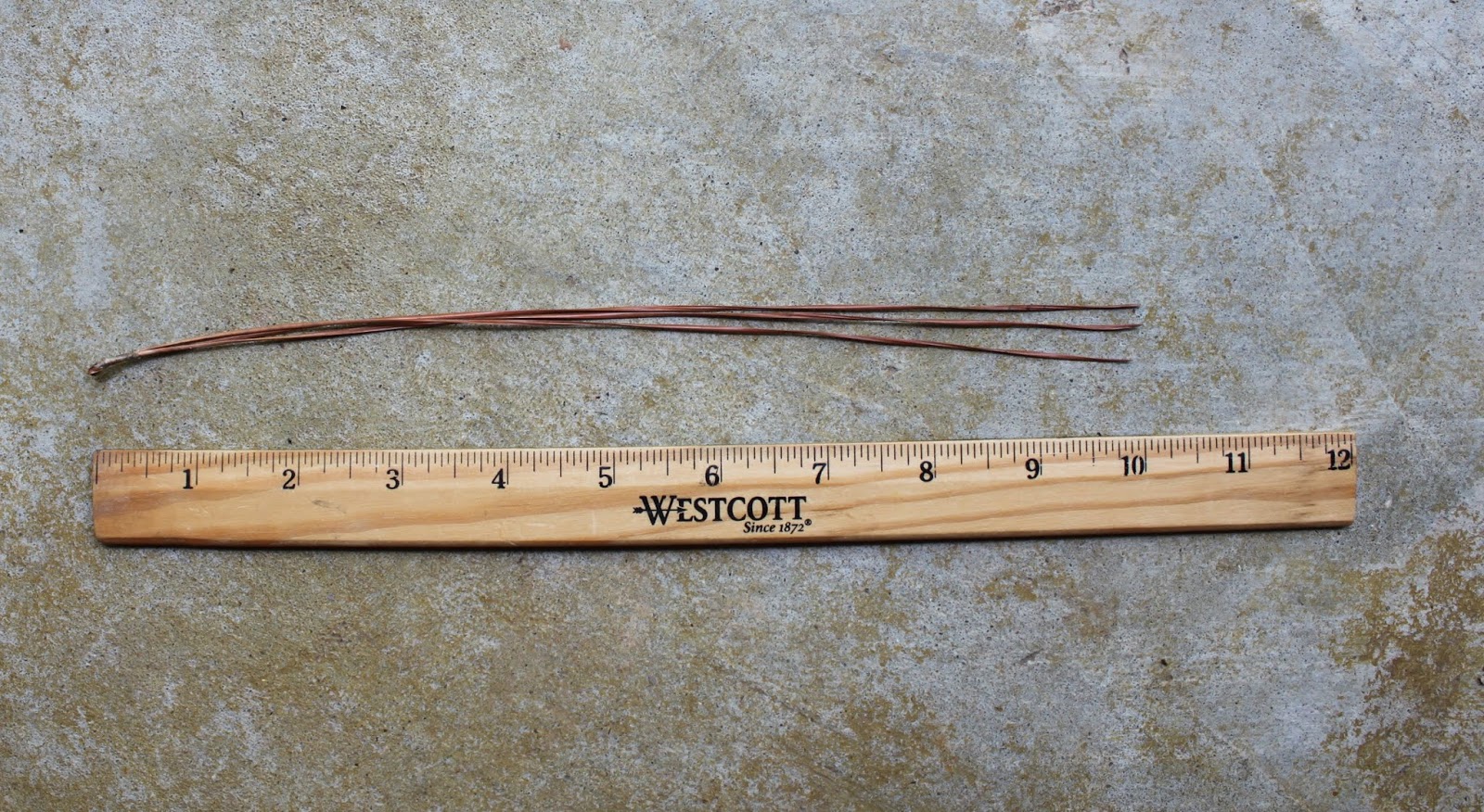
Longleaf pine needles are indeed long, some measuring more than a foot in length.
The leaves appear in bundles of three. Leaf length varies! In the photo above, two of the bundles have leaves measuring more than 13 inches.
This bundle of longleaf pine needles measures over a foot in length.
11½-inch needles
11-inch needles
10-inch needles


For more information about this species please consult the following online sources:
United States Department of Agriculture
USDA: Fire Effects Information System
Louisiana Plant Identification and Interactive Virtual Tours (LSU AgCenter)
University of Florida IFAS Extension